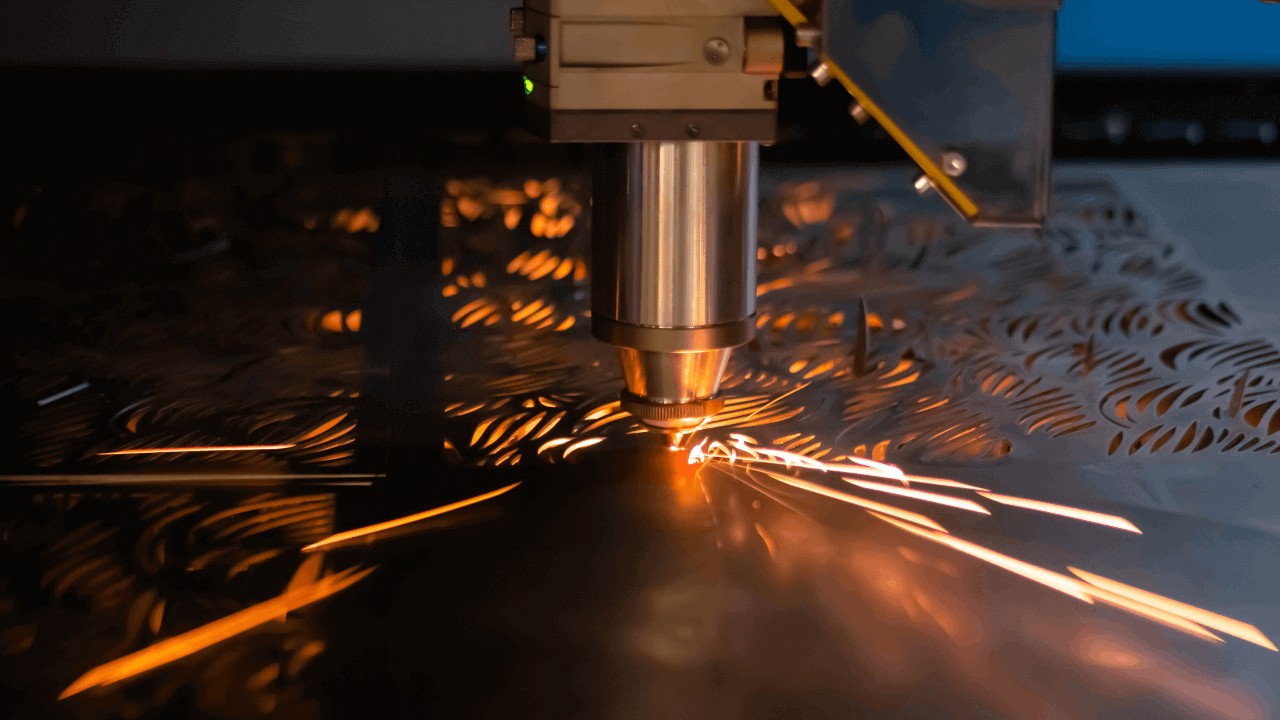
Sheet metal shaping is one of the most common methods used today, and that is by laser cutting. It uses a laser beam that cuts through metal sheets according to a program. The method is popular because it can handle intricate shapes and be repeated many times. Laser cutting is often the first process in a production workflow to translate a digital drawing into a physical part, especially in production environments like those at ShincoFab. Nevertheless, like any process, it has advantages and limitations that are relevant to its use in practice.
How laser cutting works
It begins with a metal sheet laid on a machine bed. The cutting path is controlled by a computer file. This is the path followed by the laser beam, and it melts or burns through the material. The cut line is blown out with air or gas. This means that the parts can be separated cleanly. The movement is software-controlled; therefore, under stable conditions, the output is nearly identical to the original design file.
Accuracy in detail work
Laser cutting produces pure edges and uniform shapes. It creates details like holes, slots, and tight curves without physical tools touching the metal. This helps to minimize wear and maintain consistent results throughout long production runs. ShincoFab applies this approach in projects where the component parts need to be assembled together without any manual adjustment. Small differences are minimized, even with good machine calibration.
Material response during cutting
Different metals respond differently to the laser beam. Thin sheets will cut faster with a smooth cut; thick pieces may need slower passes. Heat is also a factor, as it can cause minor alterations to the edge condition. This relates not only to machine settings but also to the metal's performance under heat and pressure during cutting.
Speed in production
Laser cutting is way faster than older methods using physical tools. Once the design's loaded, quick tweaks can be made without needing to rebuild equipment. This makes it great for both small-batch jobs and larger production runs. At places like ShincoFab, switching designs is swift and doesn't cause lengthy delays, keeping production steady.
Handling complex shapes
One advantage of laser cutting is its ability to follow complex paths. Intricate shapes that would be difficult with mechanical tools can be cut in a single pass. This reduces the need for secondary shaping steps. It also allows designers to create more detailed parts without increasing production difficulty at the cutting stage.
Heat-affected edges
Even though laser cutting is precise, it does create heat at the cut line. This can slightly change the edge condition of the metal. In some cases, this leads to minor discoloration or hardening near the edge. While not always a problem, it may affect parts that need additional finishing or tight surface requirements.
Thickness limits
Laser cutting works best within certain material thickness ranges. Very thick sheets take longer to cut and may lose edge quality. Beyond a point, other cutting methods may be more suitable. Production teams at ShincoFab often adjust method selection based on thickness to avoid unnecessary slowdowns or uneven cuts.
Edge quality variations
Not all cuts come out identical. Factors like gas pressure, material type, and machine condition can affect edge smoothness. There can be slight variations between batches, depending on setting variations. That's why it's crucial to calibrate periodically to ensure consistent output across repeated jobs.
Energy use and cost factors
Laser machines are very power-consuming. They lower tooling expenses, but in large volume production, energy may be a consideration. The balance of speed, accuracy, and cost depends on the use and frequency of machine operation during production cycles.
Integration with other processes
Laser cutting is usually not the end process. The parts are typically bent, welded, or surface treated after cutting. How well the following steps work depends on the quality of the cut. Uneven edges or slight misalignment of parts can cause alignment problems during assembly.
Practical limits in real use
Although flexible, laser cutting is not the best option for every situation. Other techniques may be necessary for very reflective metals or very thick sections. Teams at ShincoFab select cutting methods according to the needs of the parts, not on a one-size-fits-all basis.
Conclusion
Laser cutting is an important technology in today's sheet metal industry, offering rapid and precise cutting capabilities. It does not provide consistent results under uncontrolled conditions and has limitations with respect to heat, thickness, and material type. It is valuable not only on its own but also within a larger production chain. With good planning and facilitating processes, it can still be a proven solution for creating accurate components from flat metal materials in a wide range of applications.