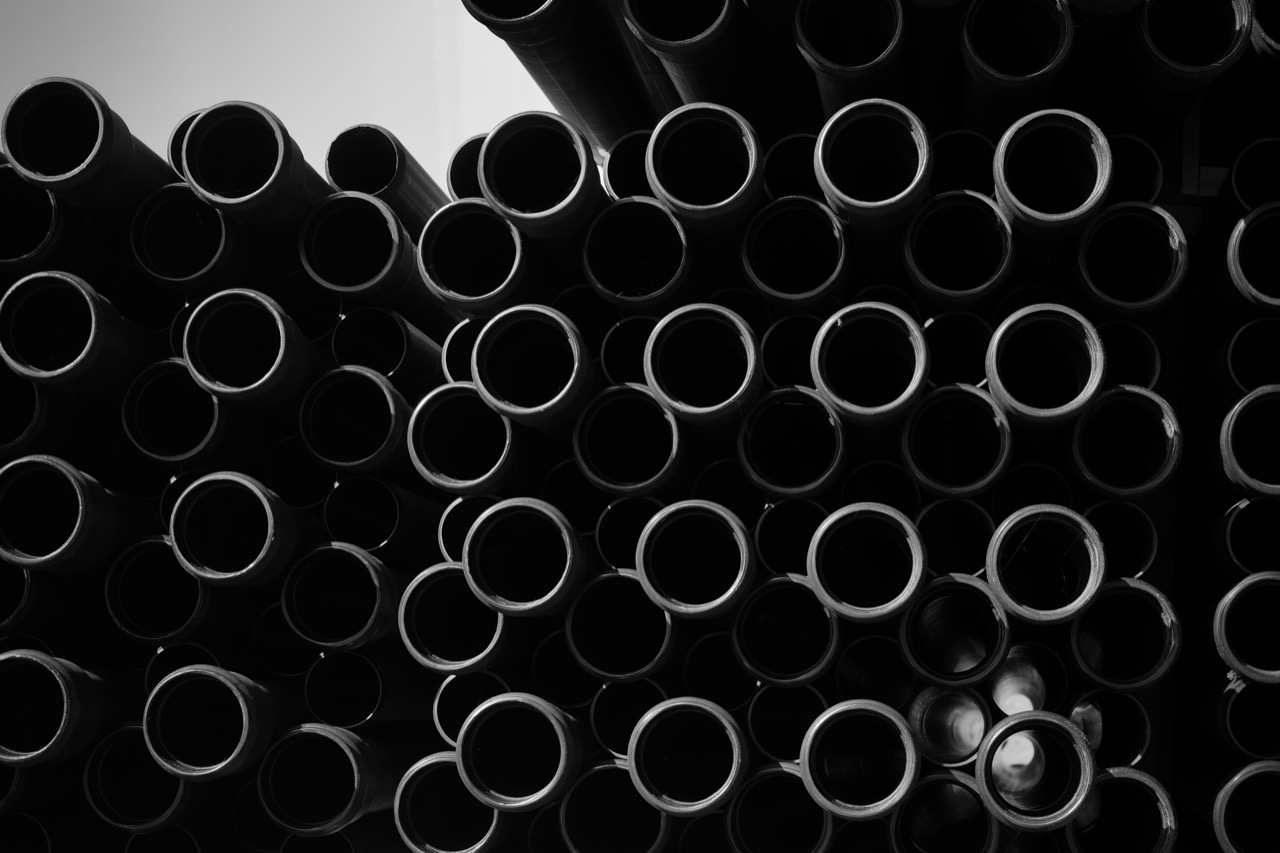
The question comes up constantly in procurement and engineering: carbon steel or stainless steel? Both are widely used in industrial piping, both come in a range of grades and pressure ratings, and both have legitimate claims to being the “right” choice — depending entirely on what you’re asking them to do.
The problem is that the decision often gets made based on habit or price rather than a clear-eyed look at the application. That leads to systems that are either overbuilt and overpriced, or underbuilt and eventually problematic. Here’s a practical breakdown of how to think through it.
What’s Actually Different Between Them
The core difference is simple: stainless steel contains chromium (usually at least 10.5%) and often nickel, which creates a passive oxide layer on the surface that resists corrosion. Carbon steel doesn’t have this layer, so it relies on coatings, linings, or environmental controls to prevent rust and corrosion.
Everything else — cost, weldability, strength, weight — flows downstream from that basic difference in metallurgy.
Where Carbon Steel Has the Edge
Carbon steel dominates industrial piping for a reason. It’s significantly cheaper than stainless, easier to source in large quantities, and available in a wider range of sizes and fittings from more suppliers. For applications where corrosion isn’t the primary concern, those advantages matter a lot.
The strongest case for carbon steel is in systems carrying non-corrosive fluids — natural gas, compressed air, oil, steam, and many process chemicals that don’t attack the metal. It’s also the material of choice for high-temperature applications, where certain carbon steel grades actually perform better than standard austenitic stainless.
Structural strength is another area where carbon steel holds its own. It has higher yield strength than most standard stainless grades, which matters in applications with significant mechanical loads or pressure cycling.
For most utility piping, general process piping, and any system where you’re controlling for budget without compromising safety, Carbon Steel Pipe is the default starting point — and for good reason. The material is well-understood, the supply chain is deep, and it performs reliably when matched to the right application.
Where Stainless Makes Sense
Stainless steel earns its premium in applications where corrosion is a real problem. Water treatment, food and beverage processing, pharmaceutical manufacturing, coastal or offshore environments, and chemical processing with corrosive media are all areas where the cost difference between carbon and stainless is easily justified by avoiding the ongoing cost of corrosion management, coating maintenance, and premature replacement.
The other major use case is sanitary applications. The smooth, non-porous surface of stainless steel resists bacterial buildup in a way that carbon steel can’t match, which is why food-grade and pharmaceutical piping systems almost always specify stainless.
For outdoor or exposed installations where applying and maintaining external coatings is impractical, stainless can also be the more economical choice over a full lifecycle, even if the upfront cost is higher.
The Grades Matter as Much as the Material
One thing that complicates the comparison is that both materials come in multiple grades, and the grade selection matters as much as the base material choice.
On the carbon steel side, the grades — A53, A106, API 5L — differ primarily in intended service, mechanical requirements, and testing standards. A53 covers both seamless and welded pipe for a wide range of applications. A106 is specified for high-temperature service. API 5L is the standard for pipeline service.
Stainless grades split primarily between the 300 series (304, 316 being the most common) and 400 series. 304 is the general-purpose workhorse. 316 adds molybdenum, which improves resistance to chlorides and is the standard choice for marine environments or applications involving saltwater, acids, or chlorinated chemicals.
Selecting the right grade within each material category is as important as the initial choice between carbon and stainless.
Cost Comparison in Practice
The price difference between carbon steel and stainless is typically three to five times, sometimes more depending on grade and market conditions. That gap is meaningful in any project involving significant pipe footage.
But raw material cost is only part of the story. Stainless pipe requires less ongoing maintenance in corrosive environments, doesn’t need external coatings, and lasts longer without requiring replacement. In applications where carbon steel would need regular inspection, painting, or replacement due to corrosion, the total cost of ownership calculation often favors stainless — even if the initial capital cost is higher.
The practical approach is to separate systems by fluid type and environment, then apply the appropriate material standard to each rather than applying one material across the board.
A Simple Decision Framework
If the fluid is corrosive, the environment is wet or chemical-heavy, or the application involves food, pharmaceuticals, or other sanitary requirements — stainless is the right call.
If the fluid is non-corrosive, the environment is controlled, and budget is a significant factor — carbon steel is typically the right choice, especially in larger diameter or longer-run systems where the cost difference compounds.
Where the answer isn’t obvious, the tiebreaker is usually maintenance access and lifecycle. A system that will be difficult to inspect, coat, or replace in the future benefits from the lower maintenance burden of stainless, even if the initial cost is harder to justify.
Getting this decision right early prevents both the cost of premature corrosion failures and the waste of over-specifying stainless steel in applications that never needed it.